Under the belief that each and every employee is a precious asset (human resource), the Mizuho Leasing Group is actively promoting diversity and inclusion throughout our organization.
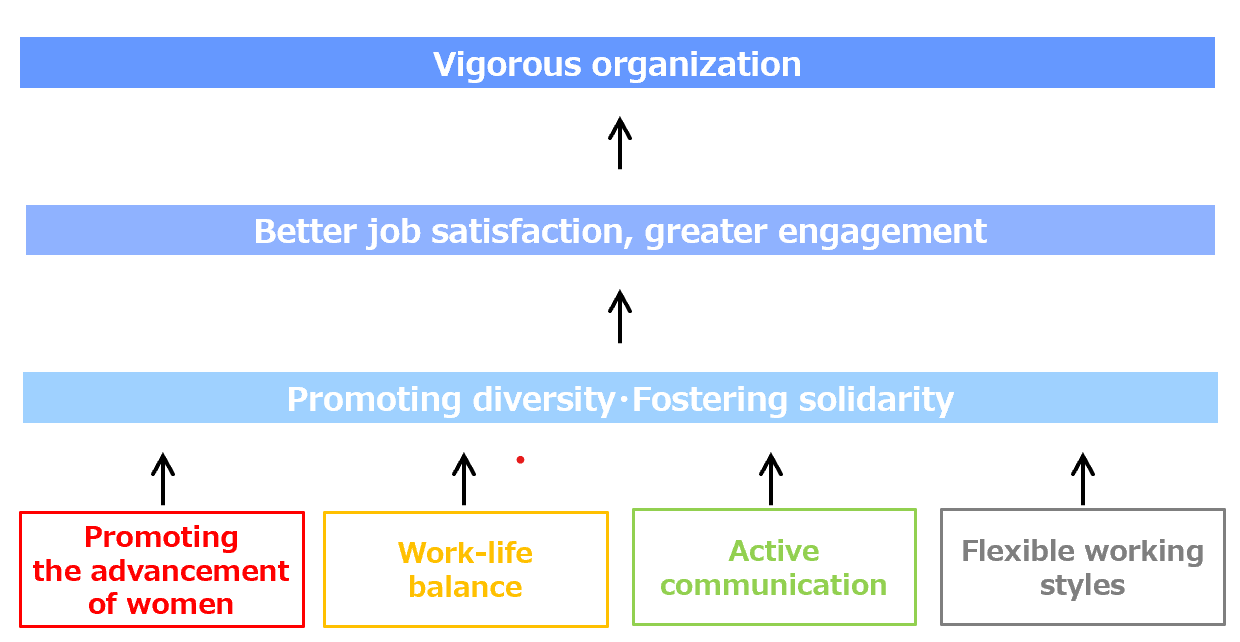
We believe that it is essential to create an organization where employees understand and appreciate one another’s different backgrounds, ways of thinking, and values, fostering mutual respect and solidarity, and enabling the organization to respond flexibly to change.
In addition, through initiatives aimed at the advancement of women, the promotion of work-life balance, enhanced communication, and flexible working styles, we strive to create an environment where each and every employee can fully demonstrate their individuality and abilities. Through these efforts, we aim to foster a highly engaged and rewarding workplace and a vibrant organization.
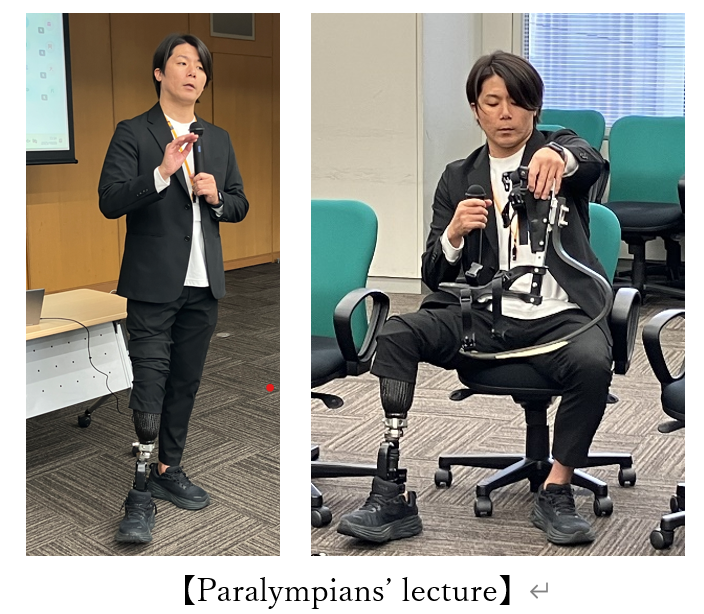
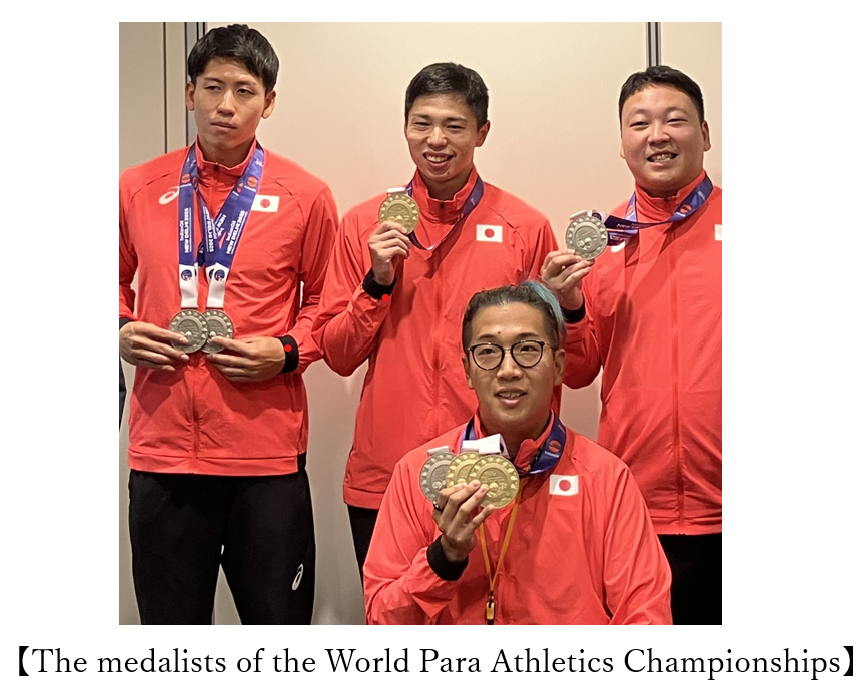
We conduct ongoing awareness-raising activities to deepen understanding and appreciation of diversity, aiming to foster a company culture in which each individual can thrive.
To promote understanding of diversity, we actively share information with our employees about diversity-related initiatives and related topics through distributing “Diversity Communication” via the in-house intranet and holding various seminars provided by external lecturers, among other means.
|
We are actively fostering workplaces where diverse individuals, including women, can maximize their potential and thrive throughout their careers. Through supporting women’s career development and their promotion to managerial positions, we aim to provide a wider range of opportunities based on individual motivation and skills, as well as create an organization where diverse individuals can continue to grow.
We have developed and are consistently implementing the following action plan to improve the employment environment so that women can play an active role in the organization.

We have achieved our target to increase the proportion of women in managerial positions to 15% by FY2025, reaching 15.6% as of the end of March 2026. To promote women’s advancement and the development and promotion of women in managerial positions, we support self-directed career development through activities such as workshops and round-table talks with women in managerial positions from outside the company. We also encourage networking among female employees and promote organization-wide efforts to support career development.
Guided by our new target to increase the proportion of women in managerial positions to 18% by FY2028, we are determined to continue these initiatives.
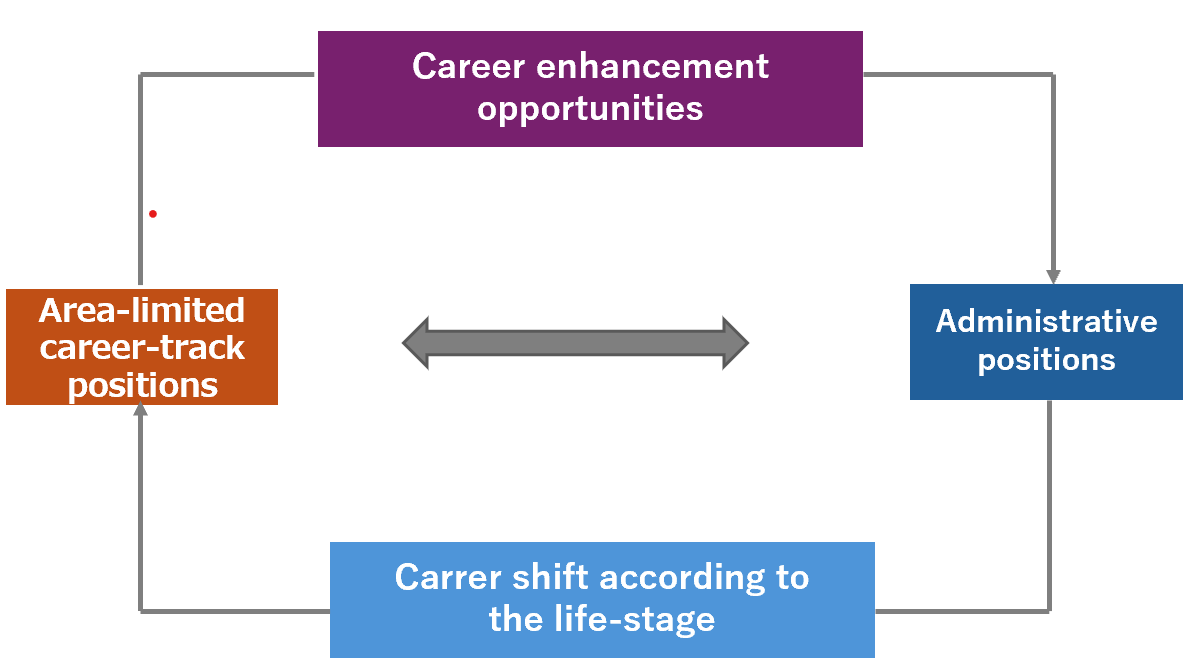
We previously had two job categories: administrative positions and career-track positions. However, the roles expected of administrative position employees have changed with the growing sophistication of operations and the evolution of customer needs.
Against this backdrop, we integrated administrative positions into area-limited career-track positions in October 2025, aiming to offer greater opportunities for administrative position employees and foster a corporate culture that transcends traditional job-category boundaries. This integration enables former administrative position employees to continue their previous work while also serving as area-limited career-track position employees, allowing them to pursue career growth (e.g., promotion, pay raises) based on their skills and achievements. Furthermore, we support each employee’s career development through activities such as individual career consultations.
To create a company culture that provides a rewarding workplace, we have developed a comfortable working environment for employees by establishing systems that enable them to work flexibly according to the life stage.
|
We met the required standards under the Act on the Promotion of Women's Active Engagement in Professional Life and our proactive initiatives to promote the empowerment of women were highly evaluated. In recognition of these initiatives, we received the Eruboshi Certification (Level 2) in January 2025.
We are committed to creating an environment in which every employee can maximize their potential while maintaining a healthy balance between work and personal life. Through respecting diverse values and lifestyles, supporting flexible working styles, and enhancing our work-life balance support system, we are striving to foster a workplace environment where all employees can work with confidence at every stage of their lives.
In our drive to improve work-life balance and lift work productivity, we are promoting flexible working styles that are unbound by fixed locations or times. By introducing a flexible staggered commuting system and a telework system, as well as establishing satellite offices, we endeavor to enable employees to work in the environment that best suits their individual situation, whether working from home or elsewhere.
In February 2025, we introduced a flextime system, enabling our employees to work more efficiently and maintain a flexible and well-balanced work style.
As teleworking has normalized, we are looking for ways to raise work efficiency and stimulate communication among employees, which tends to be lacking.
We introduced the Side Job and Dual Employment System in December 2022 for the purpose of promoting diverse working styles, as well as to enable employees to promote innovation and broaden their horizons through acquiring knowledge outside the company
To create a corporate culture where it is easy for male employees to take childcare leave, we are encouraging male employees to take childcare leave through activities such as interviewing each eligible male employee with a newborn and distributing leaflets that give an overview of the work-life balance support system and a summary of how to take leave. Based on our internal criteria*, 100% of male employees took childcare leave in FY2025 for the third consecutive year, with several employees taking consecutive long-term leave for one month or longer. We interview employees who have taken long-term childcare leave and share their stories via the in-house intranet to raise awareness about taking childcare leave among male employees. (*Of the male employees with a child that will turn one year old this year, the percentage of those who began childcare leave between the previous year and the day before their child’s first birthday).
We offer support related to balancing work and childbirth/parenting to employees of both sexes. We also established a consultation desk that provides advice related to taking childcare leave and shares information about childbirth/childcare related programs via the company intranet. Moreover, we offer a correspondence course for employees to think about their career after returning to work during childcare leave. To help address concerns related to childcare and returning to work, we also provide employees with access to an AI-powered chatbot for consultations.
Mizuho Leasing is actively working to support the development of children who will bear the next generation and received the Platinum Kurumin certification from the Minister of Health, Labour and Welfare in December 2020 based on the Act on Advancement of Measures to Support Raising Next-Generation Children as a company that is striving to deliver a higher level of child development support.
In addition to distributing nursing care handbooks, disseminating information related to nursing care, and offering e-learning programs to deepen understanding of dementia, we hold “Dementia Seminars” by external lecturers with extensive experience as care managers. Moreover, we hold “Nursing Care Round-table Talks” where employees facing nursing care-related issues can connect and share information with one another, and have set up a free consultation desk. Through these initiatives, we strive to create an environment where employees can feel secure in balancing nursing care and work.
|
We are committed to creating an inclusive workplace where diverse individuals can leverage their unique strengths to thrive in an environment of mutual respect. In addition to creating opportunities for all employees to thrive regardless of age or disability, we are actively building an organization that leverages diversity to enhance corporate value.
To continuously leverage the knowledge and expertise of our experienced employees, we raised the mandatory retirement age to 65 in FY2020. As of the end of March 2026, approximately 10% of our workforce consists of senior employees, who are thriving in various fields. We hold life design training sessions for senior employees and encourage them to rebuild their careers to enable them to continue working with a high level of motivation, and help them design a comprehensive life plan that envisions the future.
We actively recruit people with disabilities to promote their social participation. Employees with disabilities have been working not only at the head office but also at the IBUKI Kawaguchi Farm and the IBUKI Ebina Farm since May 2021 and December 2024, respectively. As part of our efforts to achieve a society and workplace where everyone can thrive, every week we distribute vegetables and herb teas from the farms to employees to raise their familiarity with, and awareness of diversity.
We are committed to building a workplace environment where each employee can stay in good mental and physical health and continue to grow and take on new challenges with confidence. By ensuring health and safety, supporting diverse and flexible working styles, and improving engagement, we aim to promote both employee well-being and sustainable organizational growth.
We hold a health committee each month in accordance with the Industrial Safety and Health Act to ensure the maintenance and promotion of employee health and safety.
We provide an annual medical checkup for all employees. For expatriate employees and their family members living together, we provide the necessary vaccinations for each country they are stationed in and a medical check-up once or twice a year in that country or Japan, depending on the country's sanitary conditions or medical level.
In addition, according to the basic policy of promoting mental health—since relaxing, gaining spiritual enrichment and securing a comfortable, safe, and worker-friendly environment are important for employees' mental health—we conduct a stress check once a year.
To ensure work-life balance and provide employees with enough time for spiritual enrichment, we aim to achieve an average paid leave utilization rate of 80% for all employees (FY2025: 76.1%). We encourage employees to take consecutive paid leave in the summer, as well as provide employees and their supervisors with information on the status of annual paid leave utilization in real time.
Since relocating our head office in February 2026, we have been creating an office environment that embraces the principles of activity-based working (ABW). Building on the concepts of “a place where we respond to change and continue to transform ourselves” and “Action! It’s My Turn!”, we have incorporated workspace and circulation designs that support diverse working styles, encourage natural dialogue, and inspire new challenges. By promoting cross-departmental collaboration and new value creation, we aim to enhance our organizational productivity and foster innovation. We strive to support flexible and efficient working styles by adopting full hot-desking and leveraging ICT.
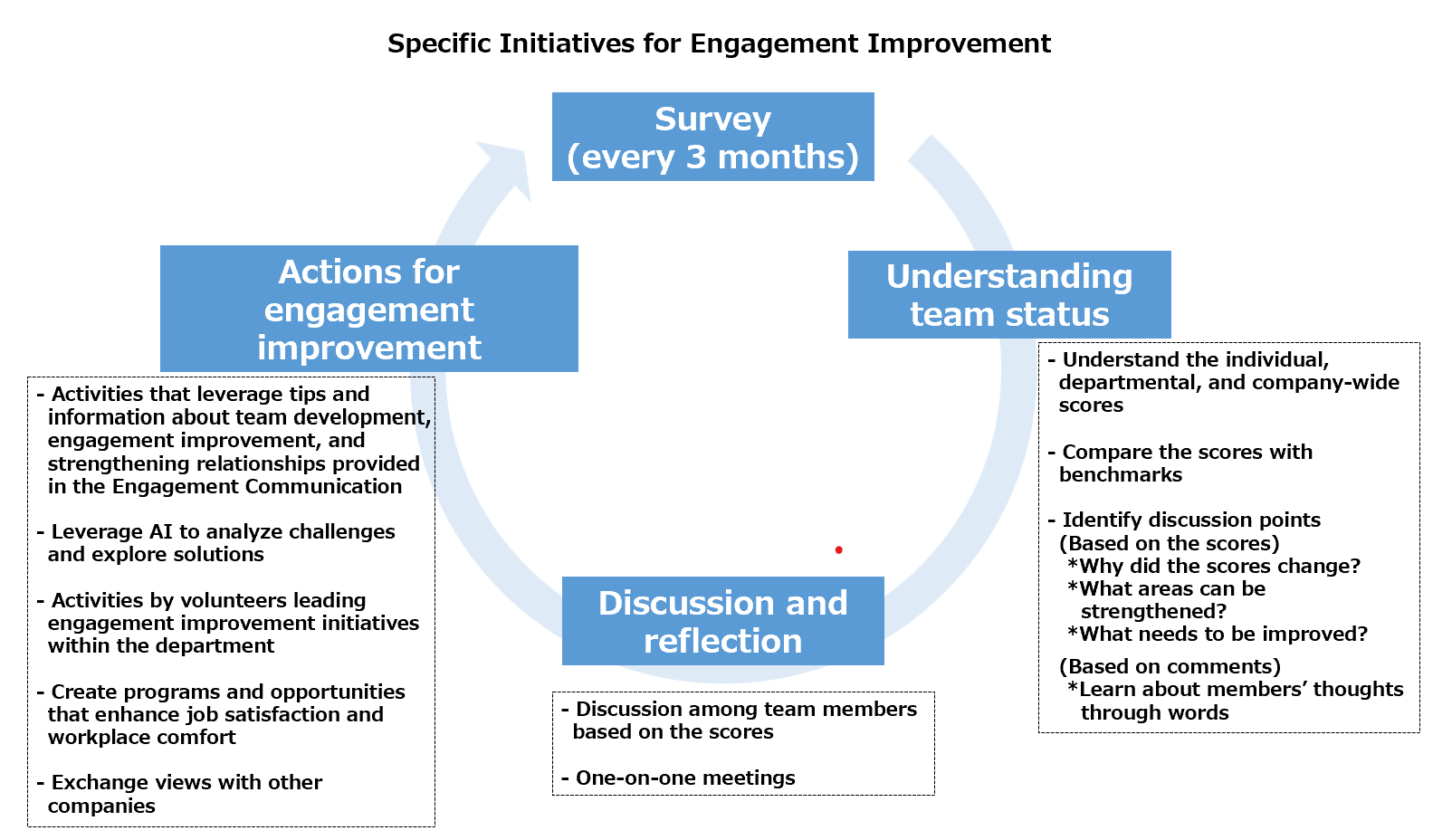
Since August 2021, we have conducted engagement surveys every three months to understand the current state of employee job satisfaction and well-being on a regular basis and to create an environment where they can take a more proactive approach to their work. We are implementing various initiatives, including the utilization of AI and discussions with other companies, to enable each employee to gain a deeper understanding of engagement and enhance engagement through their own actions.